Introduction
Wound healing involves a series of coordinated biological processes that help the body repair damaged tissue. However, when a wound becomes chronic, produces excessive fluid, or involves significant tissue damage, the natural healing process can become more complicated.
Negative Pressure Wound Therapy (NPWT) is an advanced wound management approach that uses controlled suction to create a specific environment around the wound. Rather than simply covering the affected area, the therapy applies pressure below atmospheric pressure through a specialized dressing system.
But how does this process actually work?
The science behind NPWT involves more than removing fluid from a wound. Mechanical forces, tissue deformation, changes in the wound environment, and cellular responses all contribute to its proposed mechanisms of action.
Understanding these processes helps explain why NPWT is used in selected wound care settings and why medical device design plays an important role in delivering controlled negative pressure.
How Does Negative Pressure Wound Therapy Work?
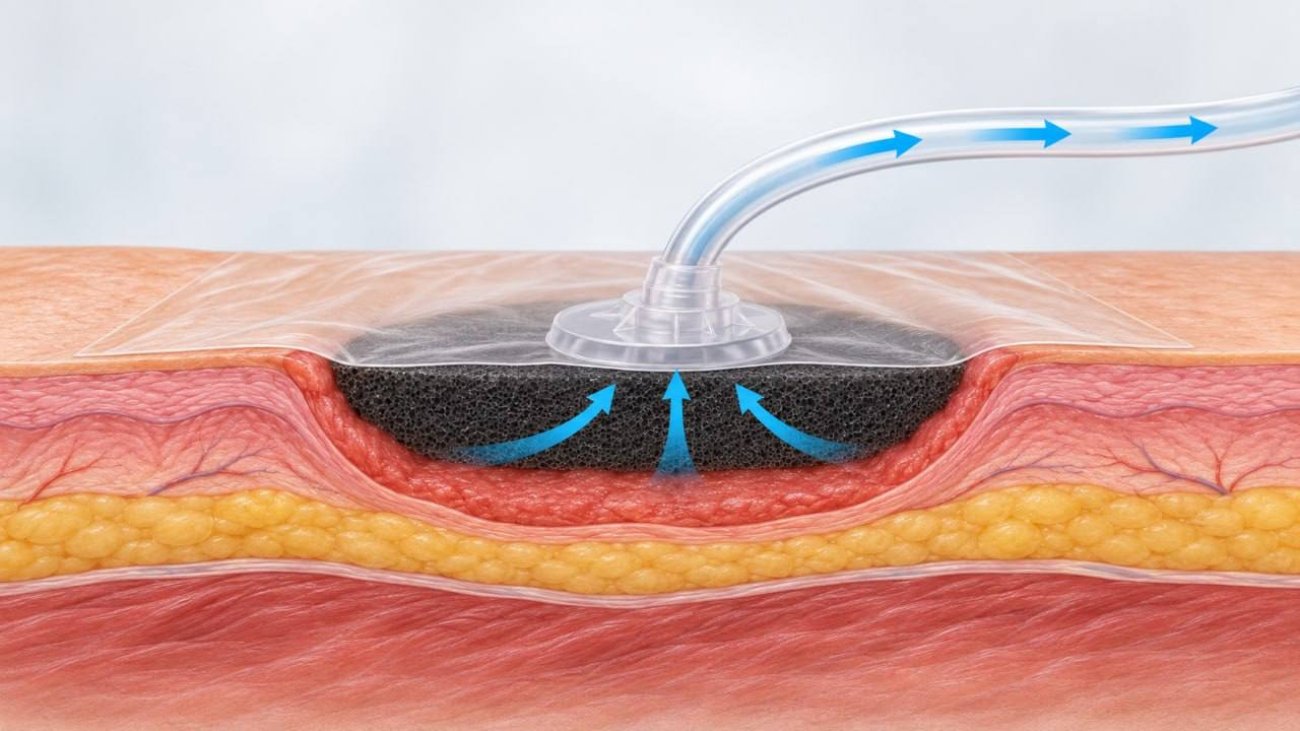
Negative Pressure Wound Therapy works by creating a sealed environment around a wound and applying controlled pressure below the surrounding atmospheric pressure.
This pressure difference creates a suction effect that draws excess wound fluid through a specialized dressing and toward a collection system or integrated fluid-management component.
A conventional NPWT system generally includes four essential elements:
- Wound interface dressing: A porous foam or specialized gauze placed over or within the wound, according to the treatment plan.
- Sealing layer: A transparent adhesive film that helps maintain the closed environment.
- Negative pressure source: A powered pump or non-powered suction mechanism that generates the required pressure.
- Fluid management pathway: A connection or integrated component that allows wound exudate to be removed or collected.
Once the dressing is properly applied and the system is activated, negative pressure is transmitted through the dressing to the wound surface. The resulting mechanical forces influence the wound environment in several ways.
Importantly, NPWT does not work through one single biological mechanism. Research has identified four major mechanisms that help explain its effects: macrodeformation, microdeformation, fluid removal, and stabilization of the wound environment.
Understanding the Four Main Mechanisms of NPWT
1. Macrodeformation: Bringing Wound Edges Closer Together
Macrodeformation refers to the larger-scale physical changes that occur when negative pressure is applied to the wound dressing.
As suction is generated, the porous dressing material compresses and contracts. When the dressing is in contact with the wound edges, this mechanical effect can help draw surrounding tissues toward the center of the wound.
This process may reduce the exposed wound area and help prepare the wound for further healing or closure.
The degree of tissue movement depends on several factors, including:
- The size and depth of the wound
- The elasticity of surrounding tissue
- The amount of available skin
- The anatomical location
- The mechanical properties of the dressing
For example, a wound surrounded by relatively flexible tissue may respond differently from a wound located in an area where the surrounding skin is under greater tension. Macrodeformation is therefore one of the most visible mechanical effects of NPWT.
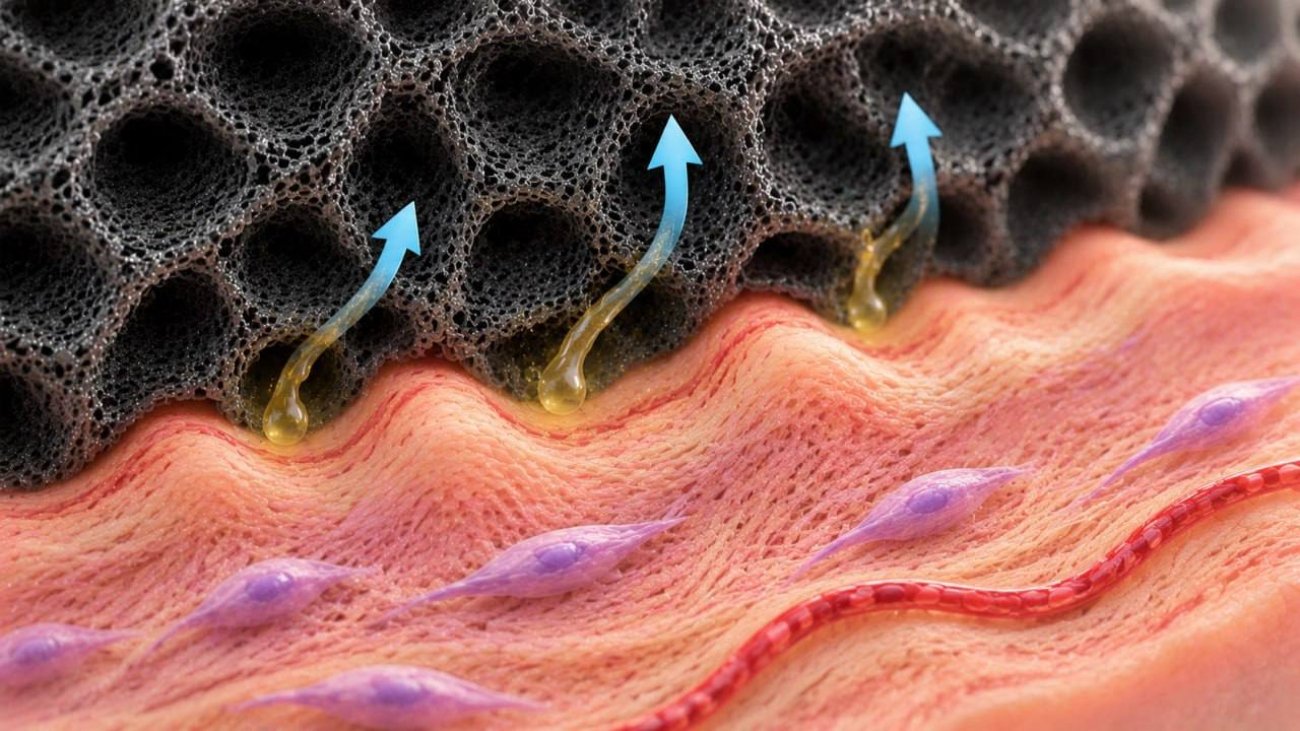
2. Microdeformation: Mechanical Stimulation at the Cellular Level
While macrodeformation involves visible tissue movement, microdeformation occurs at a much smaller scale.
The porous wound-contact material can transmit localized mechanical forces to the tissue surface when negative pressure is applied. The resulting microscopic deformation depends on foam structure, pore geometry, pressure level, tissue contact, and the dressing configuration.
Experimental research suggests that this mechanical stimulation may influence cellular activity associated with wound repair. Responses investigated in laboratory and preclinical studies include:
- Cell migration
- Cellular proliferation
- Changes in cellular signaling
- Formation of granulation tissue
- Development of new blood vessels
This response is often discussed in terms of mechanotransduction: the process by which cells convert mechanical stimuli into biochemical signals.
These signals may influence how cells respond to their local environment. However, evidence that microdeformation occurs at the tissue interface should be distinguished from evidence that it independently improves clinical healing outcomes; the latter remains under investigation.
3. Fluid Removal: Managing Excess Wound Exudate
Another important mechanism of NPWT is the removal of excess wound fluid.
Wound exudate is the fluid released from blood vessels into the surrounding tissue during inflammation and tissue repair. It contains water, proteins, inflammatory mediators, and other biological components.
A certain amount of moisture is necessary for wound healing. However, excessive fluid accumulation can contribute to swelling, damage to surrounding skin, and difficulties maintaining an appropriate wound environment.
NPWT uses controlled suction to draw excess exudate away from the wound bed. This process may provide several benefits:
Reducing localized edema
Excess fluid accumulation can increase pressure within surrounding tissues. Removing some of this fluid may help reduce swelling.
Supporting the local tissue environment
Reducing excessive fluid accumulation may help improve conditions around small blood vessels and support local tissue perfusion.
Removing excess inflammatory material
Wound exudate can contain inflammatory mediators and cellular breakdown products. Removing excess fluid also removes some of these substances.
However, fluid removal does not eliminate the underlying causes of inflammation or infection. Appropriate wound assessment and treatment remain essential.
4. Wound Environment Stabilization
The fourth major mechanism involves maintaining a controlled environment around the wound.
In conventional NPWT systems, the dressing is covered with a semi-occlusive adhesive film that helps maintain the negative-pressure environment.
This sealed configuration can:
- Help maintain consistent pressure transmission
- Limit unintended exposure of the wound to the external environment
- Support moisture management
- Reduce dressing movement
- Allow wound fluid to be managed through a defined pathway
Maintaining an appropriate wound environment is important because excessive dryness and excessive moisture can both interfere with normal tissue repair.
A properly designed dressing system helps maintain the conditions required for the intended therapy. However, a sealed dressing should not be interpreted as a guarantee against infection. Wound hygiene, clinical monitoring, and appropriate infection management remain necessary.
What Happens to the Wound After Negative Pressure Is Applied?
The effects of NPWT extend beyond the physical movement of the dressing. Mechanical stimulation and fluid management may influence several biological processes involved in wound healing.
Cellular Response and Tissue Repair
Cells involved in wound repair respond to mechanical and biochemical signals in their surrounding environment. These signals may influence the migration and proliferation of cells responsible for rebuilding damaged tissue.
Research has also investigated changes in growth factors and inflammatory mediators during NPWT.
Granulation Tissue Formation
Granulation tissue is new connective tissue containing small blood vessels that develops as a wound progresses through the repair process. It provides an important foundation for subsequent tissue coverage and wound closure.
NPWT may support granulation tissue formation through a combination of mechanical stimulation, fluid management, and changes in the wound environment.
Angiogenesis: Formation of New Blood Vessels
Angiogenesis is the development of new blood vessels from existing vascular structures. Adequate blood supply is essential for delivering oxygen and nutrients to repairing tissue.
Some studies have identified changes in angiogenesis-related signaling during NPWT. Vascular endothelial growth factor (VEGF), for example, is one of the signaling molecules investigated in research on wound repair and negative pressure therapy.
However, these biological findings should not be interpreted as proof that every NPWT system produces the same clinical results.
What Does Scientific Research Say About the Mechanisms of NPWT?
Research into NPWT has examined both its mechanical effects and its influence on biological signaling.
A review published in Seminars in Plastic Surgery in 2021 identified four primary mechanisms:
- Macrodeformation of wound tissue
- Drainage of extracellular fluid
- Stabilization of the wound environment
- Microdeformation at the tissue surface
A separate systematic review published in Expert Review of Molecular Medicine in 2023 examined the molecular effects of NPWT. The review included 19 clinical studies, 11 animal studies, and three in-vitro studies.
It investigated changes in several biomarkers and gene-expression patterns associated with inflammation and tissue repair. The findings suggested that NPWT may influence inflammatory signaling and growth-factor expression, including pathways involving TNF-alpha, VEGF, and TGF-beta.
However, the authors also emphasized that the molecular mechanisms remain an area of ongoing research.
This distinction is important: identifying a biological response does not automatically establish a predictable clinical benefit for every wound or every device.
What Determines How Effectively NPWT Works?
The performance of NPWT depends on more than the suction mechanism itself. Several technical and clinical factors influence how the therapy is delivered.
Negative Pressure Level
The amount of negative pressure must be appropriate for the specific device and clinical application. Different devices may use different pressure settings and operating characteristics. The ability to generate and maintain the intended pressure is an important performance consideration.
Dressing Material
The wound interface material influences how pressure is distributed across the wound surface. Common options include specialized polyurethane foam, polyvinyl alcohol foam, and gauze-based dressings. Different materials have different physical characteristics and may be selected according to wound requirements.
Quality of the Seal
An effective seal helps maintain the intended pressure environment. Air leakage may interfere with pressure delivery and reduce system performance.
Fluid Management
The system must be capable of handling the amount and characteristics of fluid produced by the wound. Fluid viscosity, flow rate, collection capacity, and the design of the fluid pathway can all influence system performance.
Patient and Wound Characteristics
The underlying cause of the wound, tissue condition, circulation, infection status, and other patient-related factors influence treatment decisions. NPWT must be selected according to appropriate clinical assessment rather than used as a universal wound treatment.
Why Device Design Matters in Negative Pressure Wound Therapy
The fundamental principles of NPWT depend on controlled negative pressure, but the way a device generates and delivers that pressure can differ considerably.
Traditional systems commonly use an external powered pump connected to a dressing through tubing. Depending on the system, a separate collection canister may also be required.
These components can create practical considerations involving device size, portability, setup, tubing management, and fluid collection.
Medical device innovation increasingly explores alternative configurations that may simplify the physical arrangement of NPWT systems.
Important design considerations include:
- Reliable generation of negative pressure
- Consistent pressure delivery
- Effective fluid management
- Secure dressing integration
- Patient comfort
- Ease of application
- Device safety and usability
A simplified design does not automatically mean improved clinical effectiveness. Any new configuration must demonstrate appropriate performance and safety through suitable testing and evaluation.
How VacuAid Is Exploring an Integrated Approach to NPWT
VacuAid is developing an approach to negative pressure wound therapy that focuses on integrating the suction mechanism into the wound-cover configuration.
Solution pageAccording to VacuAid’s public Solution page, its concept integrates a manually operated suction pump into a cover placed directly at the wound site.
The company presents this configuration as an effort to avoid a separate external pump and reduce external components. The public page does not specify pressure range, pressure regulation, exudate pathway or capacity, exact wound indications, or device-specific clinical outcomes.
This is a description of the company’s published design concept, not evidence of clinical superiority, regulatory clearance, or equivalence to established NPWT systems.
Product-specific claims about pressure delivery, fluid handling, sealing, safety, and usability require VacuAid’s technical specifications and verification data.
Evidence from conventional NPWT systems cannot automatically establish the performance or clinical benefits of VacuAid’s proprietary design.
VacuAid’s overview of NPWT technologyLearn more about VacuAid’s published design concept on its Solution page.
Frequently Asked Questions About How NPWT Works
NPWT uses a powered pump or a non-powered suction mechanism to generate pressure below atmospheric pressure within a sealed wound dressing. This pressure difference creates suction that helps remove excess wound fluid.
Negative pressure can create mechanical forces that draw wound edges closer together. This effect is known as macrodeformation. However, the degree of wound contraction depends on tissue characteristics, wound location, and other clinical factors.
Macrodeformation refers to visible, larger-scale tissue movement and contraction. Microdeformation describes microscopic mechanical changes at the wound surface that may influence cellular activity and tissue repair.
Negative pressure draws excess wound exudate through the porous dressing and into a fluid collection component or another device-specific management system.
NPWT may support granulation tissue formation through mechanical stimulation, fluid management, and changes in the wound environment. Research has also investigated its influence on cellular signaling and growth factors.
No. Pressure settings depend on the device, its instructions for use, the wound characteristics, and the clinical treatment plan. A healthcare professional should determine the appropriate settings.
Some NPWT systems use non-powered suction mechanisms rather than conventional external electric pumps. Their operating principles, pressure characteristics, and clinical indications vary by device.
Conclusion: The Science Behind Negative Pressure Wound Therapy
Negative Pressure Wound Therapy works through a combination of mechanical and biological processes.
By applying controlled negative pressure through a specialized dressing, NPWT can help manage excess wound fluid, create mechanical stimulation at the tissue surface, influence wound-edge movement, and maintain a controlled wound environment.
The four major mechanisms—macrodeformation, microdeformation, fluid removal, and wound environment stabilization—provide a framework for understanding how this technology supports selected wound management applications.
As medical device technology continues to evolve, innovation is also focusing on how these mechanisms can be delivered through more integrated and practical systems.
VacuAid is exploring an alternative approach through its integrated manually operated suction design.
Understanding the science behind NPWT is an important step toward evaluating new wound care technologies and their potential role in modern healthcare. Learn more about VacuAid’s approach to negative pressure wound therapy.
Scientific References
- Normandin S, Safran T, Winocour S, et al. Negative Pressure Wound Therapy: Mechanism of Action and Clinical Applications. Seminars in Plastic Surgery. 2021;35(3):164–170. doi:10.1055/s-0041-1731792.Source
- Ravindhran B, Schafer N, Howitt A, et al. Molecular mechanisms of action of negative pressure wound therapy: a systematic review. Expert Review of Molecular Medicine. 2023;25:e29.Source
- U.S. FDA. Non-Powered Suction Apparatus Device Intended for NPWT: Class II Special Controls Guidance. 2010. Note: scope is non-powered NPWT devices only.Source
Medical Disclaimer: This article is intended for educational purposes only. It does not replace professional medical advice, diagnosis, or treatment. NPWT should be selected and managed by qualified healthcare professionals according to the patient’s condition and the applicable device instructions.